

South Africa’s poultry farmers play an important role in supporting food security and maintaining a reliable supply of affordable protein. Behind the poultry products that reach consumers are farmers who make daily decisions about flock health, production, resource management and animal welfare.
At Rainbow Chicken, these responsibilities are central to its farming operations. From managing changing weather conditions and monitoring flock performance to adopting technology and coordinating teams, farmers rely on technical knowledge, careful planning and practical experience to maintain production standards.

For Nadia Van Der Westhuizen, a broiler farmer in Worcester, Western Cape, and Mildred Mmakgetsi, who manages a layer farm in Pietermaritzburg, KwaZulu-Natal, these demands shape their everyday work. Although their operations focus on different aspects of poultry production, both understand the importance of maintaining high standards to support consistent production and help nourish the nation.
Adapting to the demands of farming through the introduction of technology
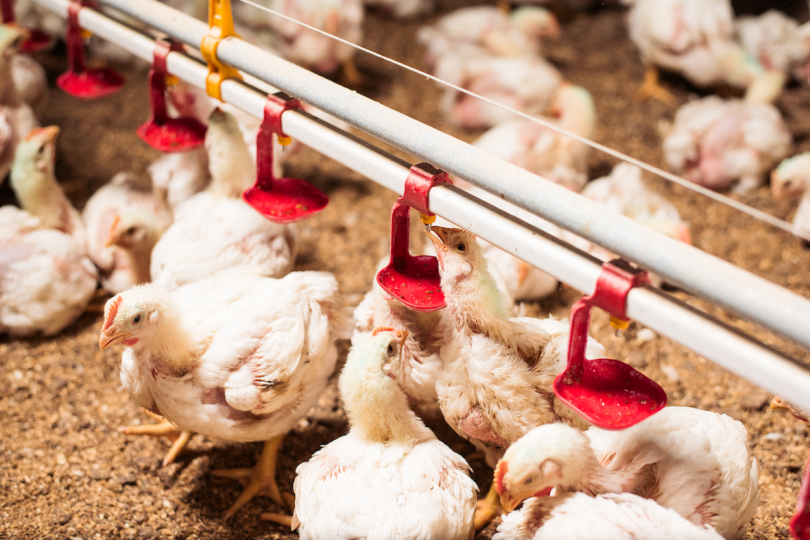
Nadia manages a broiler operation comprising 12 poultry houses, each with a capacity of 28,000 birds. Each production cycle lasts approximately 31 days, by which time the birds reach their optimal market weight.
Farming in Worcester presents particular challenges, with cold, wet winters and intensely hot summers. Many of Nadia’s poultry houses are older and operated manually, making effective ventilation essential.
To improve conditions, Nadia has introduced technology sensors and controllers that allow her to monitor temperature, humidity, carbon dioxide levels, light intensity, bird weights, air pressure, silo readings and water consumption from her cell phone.
Learning to interpret this data has become an important part of her approach. She has also installed new coal burners to maintain brooding temperatures during winter, while sealing poultry houses and upgrading equipment as her budget allows.
Biosecurity remains another priority. Although her proximity to the feed mill and processing plant offers operational advantages, it also reinforces the need for stringent disease prevention measures. Avian influenza remains one of her biggest concerns.
Strong farm performance depends on teamwork

Mildred’s experience highlights the technical knowledge and teamwork required to manage a layer farm. She oversees six poultry houses, focusing on bird welfare, biosecurity, feeding programmes, egg quality and production targets.
Her career began with an interest in agriculture at high school, where she chose Agricultural Sciences as a major subject. She went on to obtain a Diploma in Animal Production, specialising in poultry production, followed by a B-Tech degree in Agricultural Management and a short course in Project Management.
Mildred entered the poultry industry in 2016 during her in-service training and has spent the past decade developing her skills and experience.
For her, a successful day begins with ensuring that her team arrives safely at work. She believes that farm performance depends on the people behind it and recognises that achieving results requires everyone to work together.
Her team monitors flock behaviour, egg quality, feed and water consumption, record keeping, cleanliness and compliance with farm procedures. Mildred is motivated by seeing the flock’s daily performance improve and knowing that her work contributes to putting food on people’s tables.
A shared responsibility
Although broiler and layer farming have different production objectives, both require close attention to flock health, resource management and operational planning.
For Nadia, planning extends up to five weeks ahead, covering activities such as slaughter dates, cleaning and disinfection, bird placement, pest control and vaccinations. She also closely monitors expenses and works to minimise wastage, particularly of feed and coal.
Mildred’s focus on feeding programmes, bird welfare and consistent farm procedures reflects a similar commitment to managing the demands of poultry production.
Their experiences demonstrate the range of responsibilities involved in farming, from interpreting data and maintaining infrastructure to managing people and protecting flock health. Much of this work happens out of sight, yet it plays an important role in ensuring that poultry products reach consumers.
For Nadia and Mildred, nourishing the nation starts with the daily work carried out on their farms. Their stories offer a glimpse into the knowledge, care and commitment that underpin South Africa’s poultry production.