


What five small libraries in a Johannesburg township are doing that the national numbers say is impossible.
In May 2023 the world learnt what South Africa already knew. The Progress in International Reading Literacy Study found that 81% of our Grade 4 learners cannot read for meaning. We came last out of 57 countries. The trend is going the wrong way. Those numbers are the headline. They are not the story.
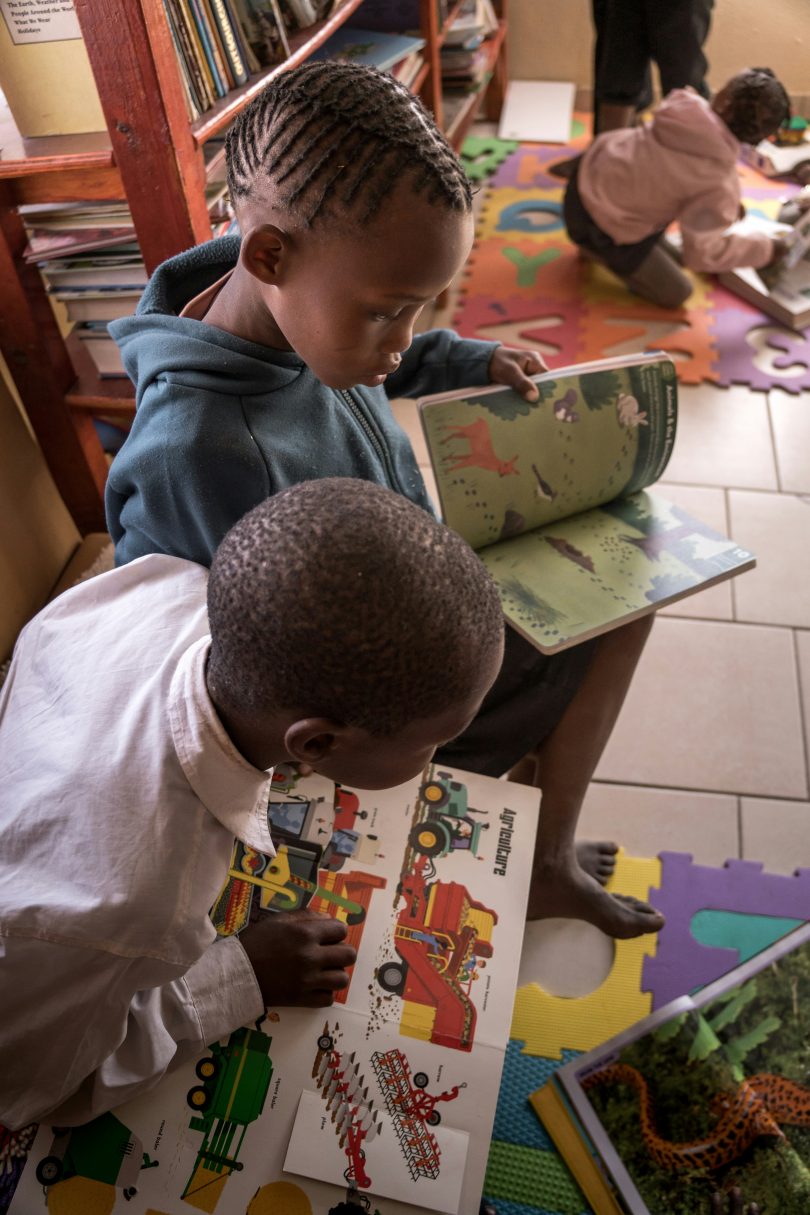
The story is sitting inside a converted shipping container behind a fence in Alexandra Township. Five of them, actually. Each one is a small school library placed by Breadline Africa, some as long as 12 years ago. This April our team spent two days visiting all five. What we found there is worth telling. Skeen Primary has a library that holds books in all 11 of South Africa’s official languages. Just over 2 000 learners walk through its doors every week. Emfundisweni Primary runs its library on a teacher rotation roster, with no dedicated librarian and no budget for one. Even so, learners from this school have reached the provincial round of the Spelling Bee. At Ekukhanyisweni Primary, children have come through that small library and gone on to win scholarships to St John’s College and St David’s Marist. M.C. Weiler Primary recently sent ten learners abroad on a study exchange.
The libraries themselves are not glamorous. Some have rusted shelving. Most are short on isiZulu and Setswana titles in a township where those are the home languages. The collections are not always age-appropriate for older grades. Four of the five rely on classroom teachers to run them with no dedicated librarian. None of these problems are small.
But all five libraries are open and being used. They are quietly, daily, doing the work that the national data says is not happening anywhere else.
What this site visit makes clear is that infrastructure is not the end of the story. It is the start of it. Breadline Africa drops a library into a school and then steps back. What happens next depends on the principal, the teachers, the parents and the children themselves. In Alexandra, “what happens next” looks like reading competitions, weekend book loans, scholarships and parent meetings about reading at home.
It is the work of ordinary schools doing extraordinary things with very little. And in a country where reading is in crisis, it suggests that the right place to start is sometimes the simplest place of all: a room with books in it and a school willing to use it.
If you would like to know more about this work or see how you can support it, visit breadlineafrica.org.



Leave a Comment