

In today’s sustainability conversations, climate action, renewable energy and environmental conservation often dominate the narrative. Yet sustainability is equally about people their health, wellbeing, dignity and ability to thrive within society. Without healthy communities, long-term social and economic sustainability becomes impossible.
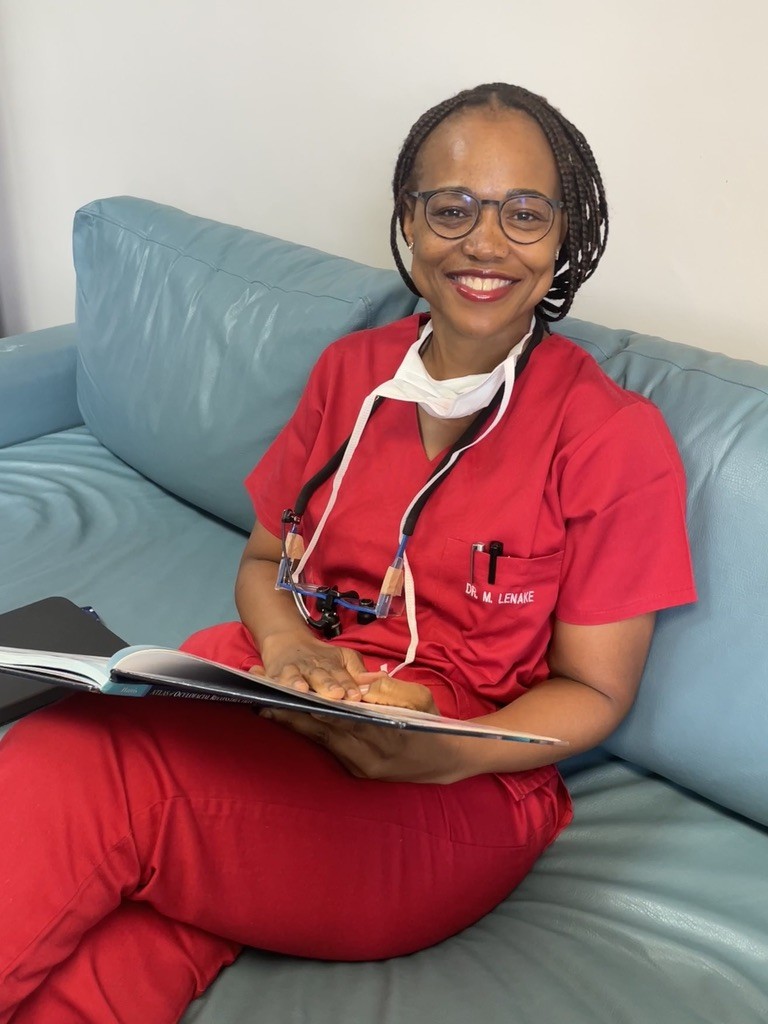
For Sustainable Living Review, the future of sustainability must include stronger conversations around healthcare equity, women’s wellness, preventative care and human-centred development. These themes sit at the heart of our recent conversation with Dr Mpopi Lenake, whose work in ophthalmology and vision restoration continues to transform lives while highlighting the critical relationship between healthcare and sustainable development.
Why healthcare is a sustainability issue
According to Dr Lenake, healthcare should be viewed as one of the foundations of sustainable development because healthy people are able to participate fully in society. Access to healthcare influences education, employment, family stability, gender equality and economic growth.
“When communities have access to quality healthcare, it creates a ripple effect,” she explains. “Healthy people can learn, work, care for their families and contribute meaningfully to society.”
As an ophthalmologist, Dr Lenake sees firsthand how restoring someone’s sight can restore their confidence, independence and overall quality of life. Vision, she notes, affects nearly every aspect of human wellbeing from education and safety to employment and social interaction. Yet eye health remains one of the most overlooked aspects of healthcare.
Many serious eye conditions, including glaucoma and diabetic retinopathy, can be managed successfully when diagnosed early. However, lack of awareness and delayed diagnosis continue to place many South Africans at risk of preventable blindness.
Wellness beyond the absence of illness
In a fast-paced and increasingly demanding world, Dr Lenake believes wellness must be approached holistically.
“To me, wellness is about balance,” she says. “It goes beyond the absence of disease and includes physical, emotional, mental and social wellbeing.”
This perspective reflects a broader shift taking place within global healthcare conversations, where mental health, preventative care, emotional wellbeing and work-life balance are becoming increasingly important components of sustainable living. True wellness, she explains, requires people to create space for rest, meaningful relationships and preventative healthcare particularly in societies where burnout and chronic stress have become common realities.
The importance of women’s health and awareness
One of the most powerful themes emerging from the conversation is the importance of women prioritising their own health. In many households, women are primary caregivers and often place the needs of their families ahead of their own wellbeing. However, Dr Lenake believes empowering women with healthcare knowledge can create generational change.
“Awareness is not a soft intervention it saves lives and sight,” she says.
Education around regular check-ups, early diagnosis and preventative healthcare remains essential, particularly in underserved communities where access to healthcare information is limited. Dr Lenake stresses that many serious conditions become far more manageable when detected early, but too often people either ignore symptoms or simply do not know what warning signs to look for. For women especially, prioritising health is not selfish it is necessary.
“When women take care of themselves, they are better able to care for their families, pursue their goals and live fulfilling lives,” she adds.
Addressing healthcare inequality in South Africa
Despite advances in medical innovation, healthcare inequality remains one of South Africa’s greatest social challenges. Dr Lenake points to financial limitations, shortages of healthcare professionals, long travel distances to clinics and overcrowded public healthcare facilities as some of the major barriers affecting access to quality healthcare. There are also significant disparities between urban and rural communities.
To address these inequalities, she believes healthcare systems must become more accessible, inclusive and patient-centred. This includes investing in mobile healthcare services, telemedicine, preventative care programmes and healthcare communication that is culturally sensitive and easy to understand.
“Accessibility is not only about geography,” she explains. “It is also about affordability, trust, communication and compassion.”
Technology and innovation also have an important role to play. Telemedicine, digital healthcare systems and advanced diagnostics have the potential to improve continuity of care and connect specialists to patients in remote areas. However, Dr Lenake emphasises that innovation must remain inclusive and accessible to all communities not only those with financial privilege.
Women in medicine and leadership
As a specialist in ophthalmology and oculoplastic surgery, Dr Lenake’s journey also reflects the growing importance of female representation within specialised medical fields. She describes ophthalmology as a field that combines precision, artistry and problem-solving with the opportunity to make life-changing impacts on patients. Her interest in oculoplastic surgery emerged from its ability to improve both functionality and confidence, sitting at the intersection of medicine and aesthetics.
Beyond her clinical work, Dr Lenake is passionate about mentorship and representation for women in medicine.
“Representation matters because it expands what young women believe is possible for themselves,” she says.
Visibility, mentorship and equitable leadership opportunities remain essential in addressing the gender barriers women continue to face in healthcare and leadership spaces. From balancing family responsibilities with demanding careers to overcoming gender bias and underrepresentation in specialised fields, many challenges still persist. However, Dr Lenake remains hopeful. She is encouraged by the growing number of women entering leadership roles, pursuing specialised careers and using their voices to drive change within South Africa’s healthcare landscape.
A more human-centred vision of sustainability
Perhaps the most profound insight shared during the conversation came from Dr Lenake’s personal definition of sustainable living.
“For me, sustainable living means building a life that I can actually maintain,” she explains. “One where my energy, my values and my time are aligned in a way that does not require me to sacrifice one for another indefinitely.”
It is a definition that moves sustainability beyond environmental language and into everyday human experience. Sustainability, in this sense, becomes about longevity creating systems, careers, communities and lifestyles that are rooted in purpose, balance and wellbeing over time.
At Sustainable Living Review, we believe this human-centred perspective is essential for the future of sustainability. Healthcare equity, women empowerment, preventative wellness and inclusive leadership are not separate from sustainable development they are central to it.
Because ultimately, sustainable communities begin with healthy people.
Dr Lenake can be reached on these platforms:
Instagram – https://www.instagram.com/drlenake/
LinkedIn – https://za.linkedin.com/in/mpopilenake







Leave a Comment